Service FileDossier de Service
- Officer #Numéro d’officier O.657
- RankGrade Superintendent
- NameNom Bramwell Smith
- EngagedEngagé September 1967 — as ConstableSeptembre 1967 — comme gendarme
- PromotedPromu Staff Sergeant — one month after engagementSergent d’état-major — un mois après l’engagement
- CommissionedCommissionné Inspector — approximately five months after engagementInspecteur — environ cinq mois après l’engagement
- Further promotionPromotion ultérieure SuperintendentSurintendant
- RoleRôle Director and Conductor, RCMP BandDirecteur et chef d’orchestre, Musique de la GRC
- TenureMandat 1967 to 19741967 à 1974
- Prior serviceService antérieur United States Marine Band — solo trumpet career; formed the Marine Herald TrumpetsMusique des Marines américains — carrière de trompettiste solo ; fondateur des Marine Herald Trumpets
- Notable achievementRéalisation notable Wrote, arranged and performed music for the Inauguration of President John F. KennedyA composé, arrangé et interprété la musique pour l’inauguration du président John F. Kennedy
- Post-RCMPAprès la GRC Leading Salesman, Yamaha Music Co.Premier vendeur, Yamaha Music Co.
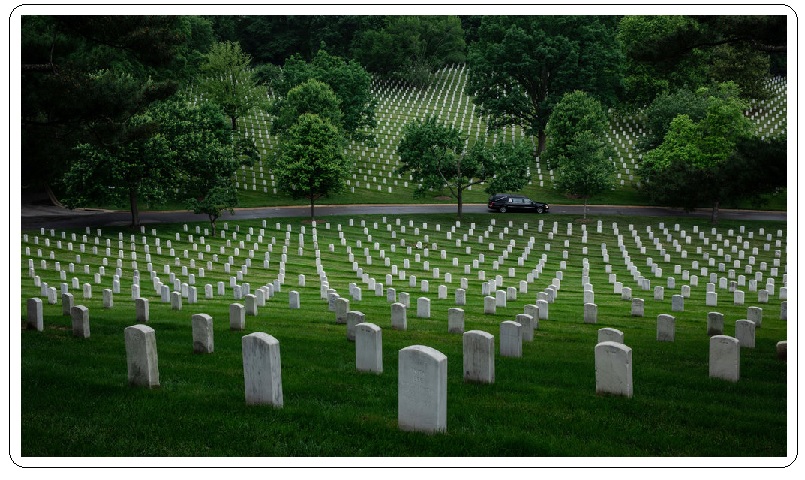
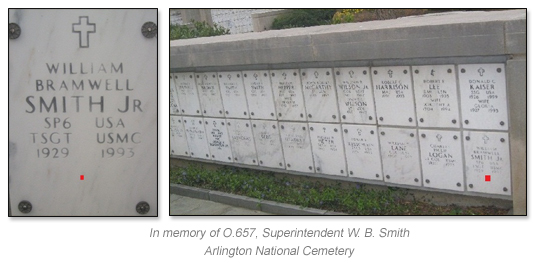
- BuriedInhumé Arlington National Cemetery, Virginia, USACimetière national d’Arlington, Virginie, États-Unis

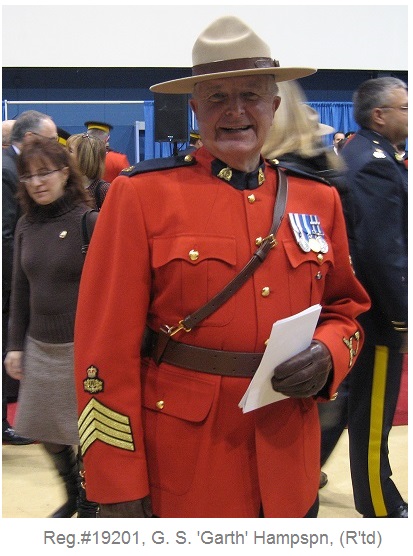
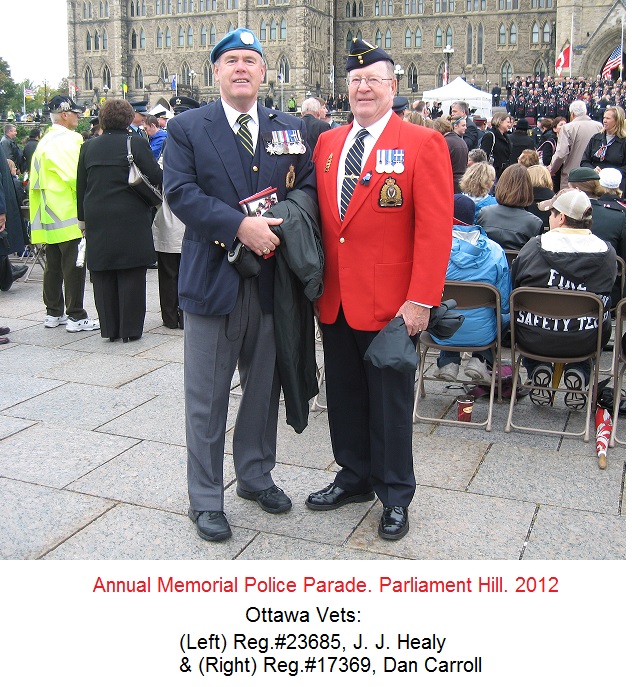
Two retired members of the RCMP Band provided the following recollections as a tribute to the only known Officer of the RCMP to be buried in the Arlington National Cemetery in Virginia, USA.
This particular member was a Canadian who, at an early age, moved to America and joined the United States Marine Corps as a member of the Marine Band.
As a seasoned musician, he returned to Canada and accepted the prestigious post of Director and Conductor of the RCMP Band. He was not a police officer, however, Dan Carroll and Garth Hampson share stories regarding the powerful effect that this unique Officer had on the public perception of an integral part of the RCMP as well as his ability to foster positive relations between communities of Canadians and local RCMP detachments.
Our story illustrates the rich diversity of skills possessed by members of the Force.
This is a tribute to Superintendent Bramwell Smith.
J. J. Healy
Deux membres retraités de la Musique de la GRC ont fourni les souvenirs suivants en hommage au seul officier de la GRC connu pour être inhumé au cimetière national d’Arlington, en Virginie, aux États-Unis.
Ce membre en particulier était un Canadien qui, dès son jeune âge, s’installa en Amérique et rejoignit le Corps des Marines des États-Unis en tant que membre de la Musique des Marines.
Musicien chevronné, il retourna au Canada et accepta le prestigieux poste de directeur et chef d’orchestre de la Musique de la GRC. Il n’était pas policier, cependant Dan Carroll et Garth Hampson partagent des histoires sur l’effet puissant que cet officier unique eut sur la perception publique d’une partie intégrante de la GRC ainsi que sur sa capacité à favoriser des relations positives entre les communautés canadiennes et les détachements locaux de la GRC.
Notre histoire illustre la riche diversité des compétences possédées par les membres de la Force.
Ceci est un hommage au surintendant Bramwell Smith.
J. J. Healy
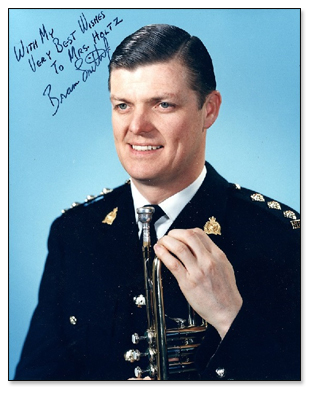
Superintendent Bramwell Smith
Director, RCMP Band 1967 to 1974
Bramwell Smith, our Vet for June 2008 left Ottawa as a young man to join the world renowned United States Marine Band. Over the years, he had many, many achievements to his credit. He had an impressive solo trumpet career and he went on to form the Marine Herald Trumpets. He was one of the few trumpet soloists in the world who had mastered the continuous breathing technique in his playing. He had several recording successes to his credit. His proudest achievement was to write, arrange and perform the music for the Inauguration of President John F. Kennedy.
‘Bram’ as he was known, engaged in the RCMP as a Constable in September 1967. He was promoted to Staff Sergeant a month later and then he received his Commission to Inspector about five months later. He was again promoted to Superintendent.
After Bram’s arrival in Ottawa, it didn’t take members in the RCMP Band long to see what a wonderful and exciting talent he was, both as a performer and leader of a musical group. However, not everyone in the Band readily accepted him. They found the change in musical direction somewhat abrupt and somewhat beyond what they were prepared to support. As a result some members left the Band.
Other musicians stayed with the Band because the more it changed into a ‘dynamic’ sounding concert unit, combining old band repertoires with new upbeat renditions, the more popular and appealing the Band became. Under Bram’s direction, the RCMP Band evolved and became more entertaining for both young and old audiences alike.
Bram strongly felt that music should serve all ages but in particular it should reach young people. His style of music became a very strong and successful recruiting aid for the Force. School programs across Canada were an instant hit. Untold wonderful comments were received about the Band’s effectiveness in Drug Awareness Programs and fundraising programs in the community. Bram’s sparkling personality shone across the stage footlights and Canadian audiences loved their own ‘Memorable Music Man Mountie’! He earned the nickname ‘Captain Colgate’ because of his engaging smile.
Surintendant Bramwell Smith
Directeur, Musique de la GRC, 1967 à 1974
Bramwell Smith, notre vétéran de juin 2008, quitta Ottawa comme jeune homme pour rejoindre la célèbre Musique des Marines des États-Unis. Au fil des ans, il accumula de très nombreuses réalisations à son actif. Il eut une impressionnante carrière de trompettiste solo et fonda ensuite les Marine Herald Trumpets. Il était l’un des rares trompettistes solos au monde à avoir maîtrisé la technique du souffle continu dans son jeu. Il connut plusieurs succès discographiques. Sa plus grande fierté fut de composer, arranger et interpréter la musique pour l’inauguration du président John F. Kennedy.
‘Bram’ comme on le connaissait, s’engagea dans la GRC comme gendarme en septembre 1967. Il fut promu sergent d’état-major un mois plus tard, puis reçut sa commission d’inspecteur environ cinq mois après. Il fut de nouveau promu au grade de surintendant.
Après l’arrivée de Bram à Ottawa, les membres de la Musique de la GRC ne tardèrent pas à voir quel talent merveilleux et stimulant il était, tant comme interprète que comme chef d’un groupe musical. Cependant, tout le monde dans la Musique ne l’accepta pas facilement. Ils trouvèrent le changement de direction musicale quelque peu brusque et quelque peu au-delà de ce qu’ils étaient prêts à soutenir. En conséquence, certains membres quittèrent la Musique.
D’autres musiciens restèrent avec la Musique parce que plus elle évoluait vers une unité de concert au son ‘dynamique’, combinant d’anciens répertoires avec de nouvelles versions entraînantes, plus la Musique devenait populaire et attrayante. Sous la direction de Bram, la Musique de la GRC évolua et devint plus divertissante pour les jeunes comme pour les moins jeunes.
Bram était fermement convaincu que la musique devait servir tous les âges, mais en particulier toucher les jeunes. Son style musical devint une aide au recrutement très forte et efficace pour la Force. Les programmes scolaires à travers le Canada furent immédiatement un succès. D’innombrables commentaires élogieux furent reçus sur l’efficacité de la Musique dans les programmes de sensibilisation aux drogues et les programmes de collecte de fonds communautaires. La personnalité étincelante de Bram brillait sur scène et les audiences canadiennes adoraient leur propre ‘Mémorable Musicien Gendarme’! Il gagna le surnom de ‘Capitaine Colgate’ en raison de son sourire engageant.
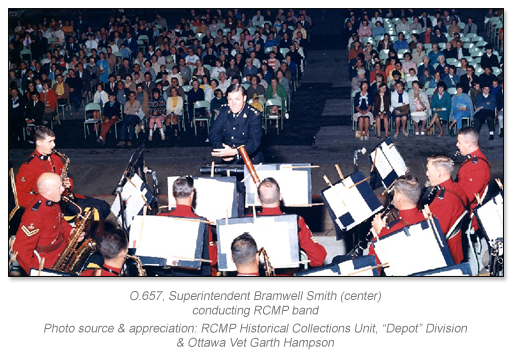
It wasn’t long before the Band put out its first recording, “Dynamic Sound”. Bram encouraged RCMP members with the music talent to come up with new musical arrangements. In this way, he brought in new musical ideas and styles especially written for the Band’s instrumentation. Here again, he had a unique sound in his mind and it wasn’t long before he had several RCMP members producing new arrangements that were the envy of other bands in Canada and in the USA.
At Bram’s instigation, the Band was invited to play at several international gigs including the Hemisfair in San Antonio, Texas in 1968, the World Fair in Osaka, Japan in 1970, and the Eastern States Exposition in Springfield, MA. Other memorable performances included a TV Christmas Special with the Girls’ Choir from St. F.X. University and the opening of the Larsen Building in Yellowknife. The RCMP received incredible international exposure through his efforts.
As RCMP Vets, we recall performing the Waltz from the Swan Lake Ballet for a performance by the National Ballet Company. Under Bram’s guidance, we rehearsed and played and then did take after take until we thought everyone in the Band might all say to hell with it. But, Bram was after perfection and without any hesitation we can say the final cut was as good as has ever been recorded by a concert band!
He thought that, in addition to touring Canada and abroad, that the Band should be recording more and doing more radio and TV broadcasting. We seized every opportunity to do so. At the same time, we continued to provide “a public relations and ceremonial service for the Royal Canadian Mounted Police and for Canada”.
Il ne fallut pas longtemps avant que la Musique ne produise son premier enregistrement, “Dynamic Sound”. Bram encouragea les membres de la GRC ayant des talents musicaux à créer de nouveaux arrangements musicaux. De cette façon, il introduisit de nouvelles idées et styles musicaux écrits spécialement pour l’instrumentation de la Musique. Là encore, il avait un son unique dans l’esprit et il ne fallut pas longtemps avant qu’il ait plusieurs membres de la GRC produisant de nouveaux arrangements qui faisaient l’envie des autres formations au Canada et aux États-Unis.
À l’initiative de Bram, la Musique fut invitée à jouer lors de plusieurs événements internationaux, notamment l’Hemisfair à San Antonio, au Texas, en 1968, l’Exposition mondiale d’Osaka, au Japon, en 1970, et l’Eastern States Exposition à Springfield, au Massachusetts. Parmi les autres prestations mémorables, citons un spécial de Noël à la télévision avec la chorale des filles de l’Université St. F.X. et l’inauguration de l’immeuble Larsen à Yellowknife. La GRC bénéficia d’une exposition internationale incroyable grâce à ses efforts.
En tant que vétérans de la GRC, nous nous souvenons d’avoir joué la valse du ballet du Lac des Cygnes pour une représentation de la Compagnie nationale de ballet. Sous la direction de Bram, nous répétâmes et jouâmes, et fîmes prise après prise jusqu’à ce que nous pensions que tout le monde dans la Musique pourrait tout envoyer promener. Mais Bram cherchait la perfection et sans aucune hésitation nous pouvons dire que la prise finale était aussi bonne que tout ce qui a jamais été enregistré par une formation de concert!
Il pensait qu’en plus de tourner au Canada et à l’étranger, la Musique devrait enregistrer davantage et faire plus d’émissions de radio et de télévision. Nous saisissions chaque occasion de le faire. En même temps, nous continuions à fournir “un service de relations publiques et cérémoniel pour la Gendarmerie royale du Canada et pour le Canada”.

Under Bram’s direction, the RCMP Band became a very highly skilled group of musicians, with an exceptional variety of stand up soloists on a number of instruments. Our programs were more than just musical entertainment; the Band took on a ‘professional show biz’ kind of aura that made the RCMP Band stand out as “one of the most professional and finest Bands of its kind in the world.” (Centennial Review Script). As Music Director, Bram believed in musical excellence and would settle for nothing less.
Bram Smith was a very intense and professional person. He put every ounce of energy into conducting a concert and he was left exhausted after each performance. Regularly, at the end of a performance, our Director would take the microphone and tell the audience that we were performing to support the operational members who work in their community 365 days a year. He always thanked the community for the support they gave our RCMP members all year round.
His remarks to the public were quite remarkable because they came from a man who had never taken a day of police training or done a day of policing. He considered the RCMP in the field to be the Band’s No. 1 customers. The Band performed for them, supporting them and their Public Relations and Police Community Relations Programs.
We can vouch that his music could bring a tear to the eye of many a hard-nosed operational police officer. Deep down every musician knew that Detachment men and women appreciated and admired his remarkable musical talents and his fun with a youthful audience. The Queen insisted that the Band be included in the Royal Visit to Calgary and ‘Depot’ Division in Regina. Commissioner Higgitt was overheard saying that ‘The RCMP could have toured the entire world with the Band!’
Following the Centennial Review in 1973 the Band went back to the regular schedule of tours. At this time, several contentious issues arose, including the Saul Study of the RCMP Band & Musical Ride. Our Director tried to keep focused on the music, however; we knew that Bram was not happy any longer. It seemed like he had achieved all that he wanted to accomplish and was looking for new challenges elsewhere. Come to think of it, during his life he had moved several times to meet new challenges in music.
Bram’s promotion to the Commission ranks upset many senior Officers in the Force and he felt this undeserved irritation for many years. On one occasion, he authorized the purchase of a Contra bass clarinet, but a Purchasing Officer sent him a tuba! One can imagine his many frustrations but in the end he finally received the clarinet.
Yet, he also had a great sense of laughter. One night after a performance in St. John’s we went out for dinner. A Newfoundlander recognized him from the concert stage and asked: “Are you the Corporal?”. Bram laughed so hard we thought he would roll on the floor.
Bram announced his retirement in the National Arts Centre at one of his final public concerts as Conductor. He seemed to be artistically and emotionally exhausted. He left the Force in the spring of 1974. He was hired by Yamaha Music Co. and he became their Leading Salesman.
Sous la direction de Bram, la Musique de la GRC devint un groupe de musiciens très hautement qualifiés, avec une variété exceptionnelle de solistes sur de nombreux instruments. Nos programmes étaient bien plus que du simple divertissement musical ; la Musique acquit une aura de ‘spectacle professionnel’ qui fit de la Musique de la GRC “l’une des formations les plus professionnelles et les meilleures de son genre au monde.” (Script de la Revue du Centenaire). En tant que directeur musical, Bram croyait en l’excellence musicale et ne se contentait de rien de moins.
Bram Smith était une personne très intense et professionnelle. Il mettait toute son énergie dans la direction d’un concert et il était épuisé après chaque représentation. Régulièrement, à la fin d’une représentation, notre directeur prenait le microphone et disait au public que nous jouions pour soutenir les membres opérationnels qui travaillent dans leurs communautés 365 jours par an. Il remerciait toujours la communauté pour le soutien qu’elle accordait à nos membres de la GRC tout au long de l’année.
Ses remarques au public étaient tout à fait remarquables parce qu’elles venaient d’un homme qui n’avait jamais suivi une journée de formation policière ni effectué une journée de travail policier. Il considérait la GRC sur le terrain comme les clients numéro un de la Musique. La Musique se produisait pour eux, les soutenant dans leurs programmes de relations publiques et de relations police-communauté.
Nous pouvons témoigner que sa musique pouvait arracher une larme à plus d’un policier opérationnel endurci. Au fond, chaque musicien savait que les hommes et les femmes des détachements appréciaient et admiraient ses remarquables talents musicaux et son plaisir avec un public jeune. La Reine insista pour que la Musique soit incluse dans la visite royale à Calgary et à la Division ‘Dépôt’ à Regina. Le commissaire Higgitt fut entendu dire que ‘La GRC aurait pu faire le tour du monde entier avec la Musique!’
Après la Revue du Centenaire en 1973, la Musique reprit le calendrier habituel des tournées. À cette époque, plusieurs questions litigieuses surgirent, notamment l’étude Saul sur la Musique de la GRC et la Patrouille équestre. Notre directeur essayait de rester concentré sur la musique, cependant ; nous savions que Bram n’était plus heureux. Il semblait avoir accompli tout ce qu’il voulait réaliser et cherchait de nouveaux défis ailleurs. À bien y penser, durant sa vie il avait déménagé plusieurs fois pour relever de nouveaux défis en musique.
La promotion de Bram au rang de commissionnaire mécontenta de nombreux officiers supérieurs de la Force et il ressentit cette irritation imméritée pendant de nombreuses années. À une occasion, il autorisa l’achat d’une clarinette contrebasse, mais un officier des achats lui envoya un tuba ! On peut imaginer ses nombreuses frustrations mais il finit par recevoir la clarinette.
Pourtant, il avait aussi un grand sens de l’humour. Un soir après une représentation à St. John’s, nous sortîmes dîner. Un Terre-Neuvien le reconnut depuis la scène de concert et demanda : “Êtes-vous le caporal ?”. Bram rit si fort que nous pensions qu’il allait se rouler par terre.
Bram annonça sa retraite au Centre national des Arts lors d’un de ses derniers concerts publics en tant que chef d’orchestre. Il semblait être artistiquement et émotionnellement épuisé. Il quitta la Force au printemps 1974. Il fut engagé par Yamaha Music Co. et devint leur premier vendeur.
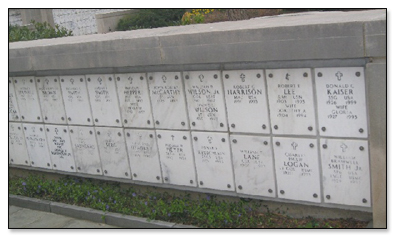
*Superintendent Smith’s grave marker in Arlington Cemetery is found at bottom far right. *La pierre tombale du surintendant Smith au cimetière d’Arlington se trouve en bas à l’extrême droite.
We gave him our full support without any hesitation, which at times got us into hot water. But we didn’t mind because we knew that we were a damn good outfit, and the RCMP deserved the best that we could be; no less! He built the RCMP Band into one of the best in the world.
Nous lui avons accordé notre soutien total sans hésitation, ce qui nous a parfois valu des ennuis. Mais cela ne nous dérangeait pas car nous savions que nous étions une sacrément bonne formation, et la GRC méritait le meilleur de ce que nous pouvions être ; rien de moins ! Il fit de la Musique de la GRC l’une des meilleures au monde.
We give a tip of our Stetson to RCMP Superintendent Bramwell Smith, RCMP Band Director 1967 to 1974. Bram was a special person: a very talented musician, a dynamic leader and a gifted conductor. He did a great job of bringing the RCMP Band to a higher level in every respect. We proudly and fondly remember him.
Unfortunately, his success in the music world was shortened by cancer. After several years in remission, the cancer returned and he wasn’t able to meet the challenge.
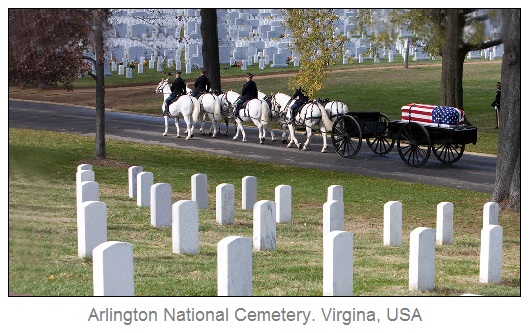
Shortly after Bram’s death, the US Marines asked to have his remains interred in Arlington National Cemetery.
Nous soulevons notre Stetson au surintendant Bramwell Smith de la GRC, directeur de la Musique de la GRC de 1967 à 1974. Bram était une personne spéciale : un musicien très talentueux, un chef dynamique et un chef d’orchestre doué. Il fit un excellent travail en amenant la Musique de la GRC à un niveau supérieur à tous égards. Nous le rappelons avec fierté et affection.
Malheureusement, son succès dans le monde de la musique fut abrégé par le cancer. Après plusieurs années de rémission, le cancer revint et il ne fut pas en mesure de relever le défi.
Peu après la mort de Bram, les Marines américains demandèrent à ce que ses restes soient inhumés au cimetière national d’Arlington.
Photos at Arlington Cemetery (2008) by Reg.#23685, Joe Healy
Photos of Superintendent Smith and he and the Band were kindly provided by Ottawa Vet Garth Hampson and courtesy of the Historical Collections Unit at ‘Depot’ Division.
Photos au cimetière d’Arlington (2008) par Reg.#23685, Joe Healy
Les photos du surintendant Smith et de lui avec la Musique ont été aimablement fournies par le vétéran d’Ottawa Garth Hampson et avec l’autorisation de l’Unité des collections historiques de la Division ‘Dépôt’.
Reporting from Fort Healy · J. J. Healy · June 23, 2008 Reportage depuis Fort Healy · J. J. Healy · 23 juin 2008
↑ Back to TopRetour en haut ← Back to Vet of the MonthRetour au Vétéran du Mois