Service File Dossier de Service
- RankGrade Special Constable — Guide Gendarme spécial — Guide
- NameNom Jerry Potts
- BornNé 1840 — Fort McKenzie, Montana, USA 1840 — Fort McKenzie, Montana, États-Unis
- HeritageOrigines Mother: Piegan tribe — Father: Scottish Mère : tribu Piégan — Père : Écossais
- EngagedEngagé circa 1874 — hired as Guide by Commissioner French vers 1874 — engagé comme guide par le commissaire French
- LanguagesLangues English, Blackfoot, Cree Anglais, pied-noir, cri
- ServiceService 22 years with the NWMP 22 ans avec la PCNO
- RolesRôles Guide, trainer of scouts, diplomat with Indians, expert interpreter Guide, instructeur d’éclaireurs, diplomate auprès des Indiens, interprète expert
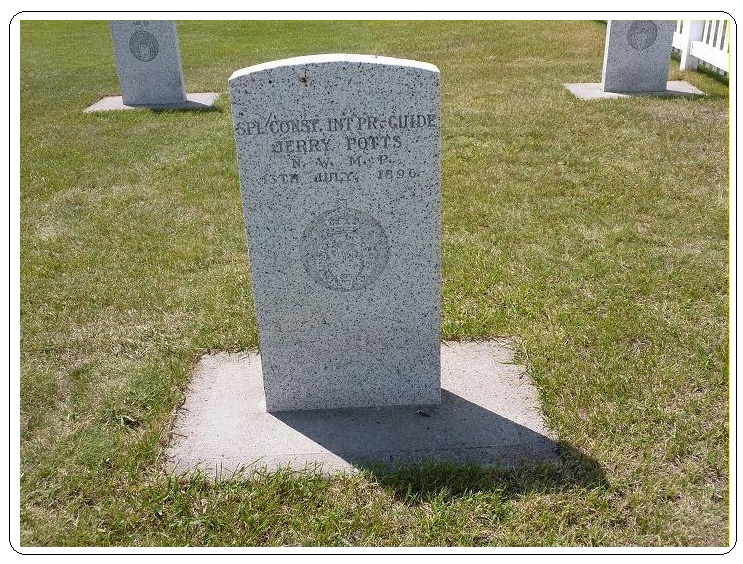
- DiedDécédé July 14, 1896 — Fort MacLeod, Alberta 14 juillet 1896 — Fort MacLeod, Alberta
- BuriedInhumé Police Cemetery, Fort MacLeod, Alberta Cimetière de la Police, Fort MacLeod, Alberta
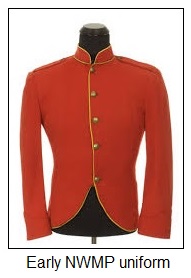
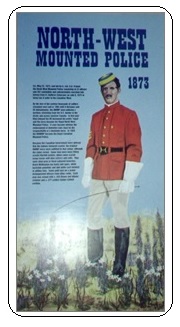
At birth time of the early Force circa 1873, policies to hire or engage men into the North West Mounted Police (NWMP) were simple and clear. On paper, the ideal recruit should be of good character, physically fit, able to ride a horse and able to read and speak either French or English.
À l’époque de la création de la jeune Force vers 1873, les politiques d’embauche et d’engagement dans la Police à cheval du Nord-Ouest (PCNO) étaient simples et claires. Sur le papier, la recrue idéale devait avoir bon caractère, être en bonne condition physique, savoir monter à cheval et être capable de lire et de parler le français ou l’anglais.
As time went on, Officers in the field employed wide latitude and flexibility to hire. Book rules were sometimes overlooked if a man displayed special talents such as; fighting skills, horse breaking, a fluency of Indian languages, tracking skills, intelligence gathering or an expertise in guiding strangers over the prairies.
Au fil du temps, les officiers sur le terrain firent preuve d’une grande souplesse dans leurs embauches. Les règles étaient parfois ignorées si un homme affichait des talents particuliers tels que des compétences au combat, le dressage de chevaux, la maîtrise des langues indiennes, la traque, la collecte de renseignements ou une expertise pour guider des étrangers à travers les prairies.
A through background check for recruits was not pressing or necessary. In fact, most times a man did not want his past secrets to come to light. A man felt that the past was the past. Our August Vet of the Month does not fit the usual mold as he had a questionably past and he could not read or write. That aside, Jerry Potts is known as being one of the most colourful characters of the NWMP. Jerry Potts quickly became a friend and a valued asset to the early Force.
Une vérification approfondie des antécédents des recrues n’était pas urgente ni nécessaire. En fait, la plupart du temps, un homme ne souhaitait pas que ses secrets du passé soient dévoilés. Un homme estimait que le passé était le passé. Notre Vétéran du mois d’août ne correspond pas au moule habituel, car il avait un passé douteux et ne savait ni lire ni écrire. Cela mis à part, Jerry Potts est connu comme l’un des personnages les plus colorés de la PCNO. Jerry Potts devint rapidement un ami et un atout précieux pour la jeune Force.
Strangers to the west included the NWMP but they quickly recognized the unusual skills of Jerry Potts. He was a tough character and he possessed survival outdoor skills which were sought by the NWMP. History places Jerry Potts somewhere between being a dangerous and unpredictable person and a valuable employee to the police. He was born in 1840 and folklore has it that he killed a man at age twenty-two. About 1874, Potts caught the favourable attention of Commissioner French who set the usual employment rules aside and hired him as a Guide at the rank of Special Constable.
Les étrangers à l’Ouest comprenaient la PCNO, mais ils reconnurent rapidement les compétences inhabituelles de Jerry Potts. C’était un personnage endurci qui possédait des aptitudes de survie en plein air que la PCNO recherchait. L’histoire place Jerry Potts quelque part entre le personnage dangereux et imprévisible et l’employé précieux pour la police. Né en 1840, le folklore veut qu’il ait tué un homme à vingt-deux ans. Vers 1874, Potts attira favorablement l’attention du commissaire French, qui mit de côté les règles d’emploi habituelles et l’engagea comme guide au grade de gendarme spécial.
It is known that Jerry Potts was born at Fort McKenzie, Montana, USA. It is also widely accepted that his mother belonged to the Piegan tribe and it’s known with more certainty that his father was Scottish. It is believed that Jerry Potts was married to two women and that his pedigree included a large family of sons and daughters.
On sait que Jerry Potts est né à Fort McKenzie, au Montana, aux États-Unis. Il est également généralement admis que sa mère appartenait à la tribu piégan et il est plus certain que son père était écossais. On croit que Jerry Potts était marié à deux femmes et que sa lignée comprenait une grande famille de fils et de filles.
Prior to joining the NWMP, Potts had carved out a career by selling horses and he had gained sufficient wealth. Although he was illiterate, he was considered an insightful businessman with a large inventory of horses ready for sale especially if a profit was to be made.
Avant de rejoindre la PCNO, Potts s’était taillé une carrière dans la vente de chevaux et avait acquis une richesse suffisante. Bien qu’il fût analphabète, il était considéré comme un homme d’affaires perspicace disposant d’un important inventaire de chevaux prêts à la vente, surtout si un profit était à réaliser.
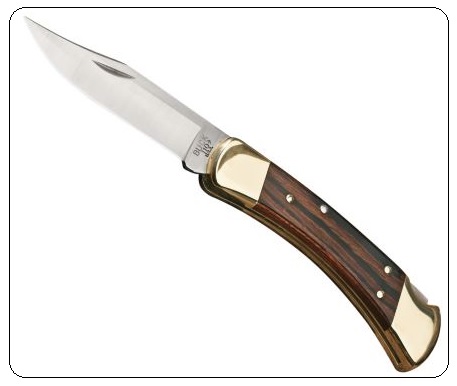
Jerry Potts had trained himself to be an expert marksman and he possessed an uncanny ability to win with knife fighting. In addition to his pistols and a very visible rifle, Potts also carried other guns and knives which were hidden under folds of his clothes.
Jerry Potts s’était entraîné à devenir un tireur d’élite expert et possédait une capacité étrange à remporter les combats au couteau. En plus de ses pistolets et d’un fusil très visible, Potts portait également d’autres armes à feu et couteaux dissimulés sous les plis de ses vêtements.
Jerry Potts had one foot in the white man’s world and the other foot in Indian land. The story is told that he was mystified at some of the cultural habits of the NWMP. On one occasion, Potts asked why the white man would equip his living place with a chamber pot. “Why,” he asked a Mountie, “would anyone [pee] in a perfectly good eating bowl when the entire prairie lay before him”? He could speak several languages and was fluent in English, Blackfoot and Cree.
Jerry Potts avait un pied dans le monde de l’homme blanc et l’autre dans le territoire indien. On raconte qu’il était perplexe devant certaines habitudes culturelles de la PCNO. Un jour, Potts demanda pourquoi l’homme blanc équiperait son logis d’un pot de chambre. « Pourquoi, demanda-t-il à un gendarme, quelqu’un [urinerait-il] dans un parfaitement bon bol à manger alors que toute la prairie s’étend devant lui ? » Il parlait plusieurs langues et maîtrisait l’anglais, le pied-noir et le cri.
In his book ‘Policing the Plains’, author R.G. MacBeth, provides a detailed description of Jerry Potts. MacBeth tells us that, “…Jerry Potts, [was] a short, heavy-set, taciturn man, half Scot and half Piegan, a wonderful plainsman, skilled in the language of the Indian tribes and a past-master in all the lore of the prairies” (p.54).
Dans son livre « Policing the Plains », l’auteur R.G. MacBeth fournit une description détaillée de Jerry Potts. MacBeth nous dit que « …Jerry Potts était un homme de petite taille, trapu et taciturne, moitié Écossais et moitié Piégan, un merveilleux homme des plaines, habile dans les langues des tribus indiennes et un passé-maître dans tout le savoir des prairies » (p.54).
Jerry Potts was employed by the NWMP as a trainer of scouts, a diplomat with the Indians, and an expert interpreter. As well, he possessed other valuable skills which made him an asset to the NWMP. MacBeth states: “He [Potts] began to be useful as soon as he took service with the Force in that fall of 1874. He guided them [NWMP] to be best feeding places for the horses and cattle, and to the watering places which were so constantly needed” (p.54). In short, Jerry Potts was a man fit for the early times and harsh conditions of the NWMP.
Jerry Potts fut employé par la PCNO comme instructeur d’éclaireurs, diplomate auprès des Indiens et interprète expert. De plus, il possédait d’autres compétences précieuses qui faisaient de lui un atout pour la PCNO. MacBeth écrit : « Il [Potts] commença à être utile dès qu’il prit du service dans la Force à l’automne 1874. Il les guidait [la PCNO] vers les meilleurs pâturages pour les chevaux et le bétail, et vers les points d’abreuvement dont ils avaient si constamment besoin » (p.54). En bref, Jerry Potts était un homme fait pour les premiers temps et les conditions rigoureuses de la PCNO.
Jerry Potts may have committed some serious transgressions in his past, but he was recognized as an expert outdoorsman which was the principal reason for his engagement into the Force. Hence, his appreciative contributions to the NWMP. Special Constable Potts served the NWMP for 22 years.
Jerry Potts avait peut-être commis de graves transgressions dans son passé, mais il était reconnu comme un expert en plein air, ce qui était la principale raison de son engagement dans la Force. D’où ses contributions appréciées à la PCNO. Le gendarme spécial Potts servit la PCNO pendant 22 ans.
He died at Fort MacLeod, Alberta on July 14, 1896 and he is buried in the Police Cemetery at Fort MacLeod. R. I. P.
Il mourut à Fort MacLeod, en Alberta, le 14 juillet 1896, et est inhumé dans le cimetière de la Police à Fort MacLeod. R.I.P.
Sources:
Sources :
On line. Wikipedia, the free encyclopaedia. (Jerry Potts)
En ligne. Wikipedia, l’encyclopédie libre. (Jerry Potts)
MacBeth, R.G. (no year of publication). Policing the Plains. (Being the Real-Life Record of the Famous North-West Mounted Police). Hodder and Stoughton Ltd. London.
MacBeth, R.G. (année de publication inconnue). Policing the Plains. (Being the Real-Life Record of the Famous North-West Mounted Police). Hodder and Stoughton Ltd. Londres.
Reporting from Fort Healy · J. J. Healy · August 23, 2009 Reportage depuis Fort Healy · J. J. Healy · 23 août 2009
↑ Back to Top ↑ Retour en Haut ← Back to Vet of the Month ← Retour au Vétéran du Mois